
Keynote Speakers
10th International Workshop on Image Mining. Theory and Applications (IMTA-X-2026)
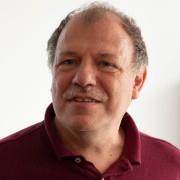
Prof. Michael Beetz
University of Bremen, Bremen, Germany
"Watching to Act: Mining Knowledge and Competence for Everyday Manipulation from Instructional Videos"
OnlineAbstract
Instructional videos provide a vast but largely untapped source of knowledge about how people accomplish everyday manipulation tasks. Yet robots cannot acquire competence by merely reproducing observed motions. Successful manipulation requires recovering the hidden structure of action: the demonstrator’s goal, the functional roles of objects, the causal and physical conditions for success, and the constraints that must be satisfied when the action is performed in a new situation.
This talk presents the Deep Action Observer (DAO), an approach that transforms instructional videos into structured, executable, and transferable manipulation knowledge. DAO reconstructs demonstrations in physics-enabled semantic digital twins and represents each action through interconnected scene, action, and motion designators. These representations enable robots to infer why an action works, validate its physical feasibility, adapt it to novel objects and environments, and re-realize it for different robot embodiments. The central claim is that mastering everyday manipulation requires combining the semantic power of generative AI with explicit models of intention, causality, and physics.
Biography
Michael Beetz is a professor for Computer Science at the Faculty for Mathematics & Informatics of the University Bremen and head of the Institute for Artificial Intelligence (IAI). IAI investigates AI-based control methods for robotic agents, with a focus on human-scale everyday manipulation tasks. With his openEASE, a web-based knowledge service providing robot and human activity data, Michael Beetz aims at improving interoperability in robotics and lowering the barriers for robot programming. Due to this the IAI group provides most of its results as open-source software, primarily in the ROS software library.
Michael Beetz received his diploma degree in Computer Science with distinction from the University of Kaiserslautern. His MSc, MPhil, and PhD degrees were awarded by Yale University in 1993, 1994, and 1996 and his Venia Legendi from the University of Bonn in 2000. He is associate editor of the AI Journal and the coordinator of the German collaborative research centre EASE. In 2019, he received a honorary degree from the University of Örebro for his longstanding cooperation and exceptional, international research.

Dr. Denisse Sciamarella
Franco-Argentine Institute for Climate Studies and its Impacts (IFAECI), CNRS, France
"Pattern Recognition from Fluids in Motion: Applications to the Geosciences"
OnlineAbstract
Geophysical flows exhibit observable patterns such as dust transport in the atmosphere or phytoplankton blooms in the oceans. Yet the invisible structures that organize particle motion in fluids are what generate and sustain the visible patterns. When we track individual water or air particles as they move, they form barriers that can be computed from measurements but cannot be directly seen. These hidden structures organize transport pathways and non-mixing regions that govern the advection of nutrients, heat, or contaminants.
This talk contrasts classical Topological Data Analysis, which helps describe the visible patterns with more success than standard geometrical or statistical approaches, with Directed Algebraic Topology which, together with new elements for a theory of nonlinear dynamics, helps reconstruct the invisible organization of particle motion in a fluid flow.
Biography
The research activities of Dr. Denisse Sciamarella comprise the development of new elements for a theory of chaos topology and their application to fluid motion and climate dynamics. She was awarded her PhD from the University of Buenos Aires and her HDR diploma from the University of Paris-Saclay, both in Physics.
She is a researcher at the Centre National de la Recherche Scientifique (CNRS) and deputy director of IFAECI, where she created the research group "Mathematics for the Geosciences." Her work on the topological structure of chaotic flows from data led to the creation of a mathematical object called templex, which enables unveiling order within chaos through category theory. Her project, "Topological Methods for the Planet's Dynamics," funded by the Agence Nationale de la Recherche (France), applies this concept to pattern recognition from dynamics in an interdisciplinary approach to climate studies with promising perspectives in physics-informed machine learning.
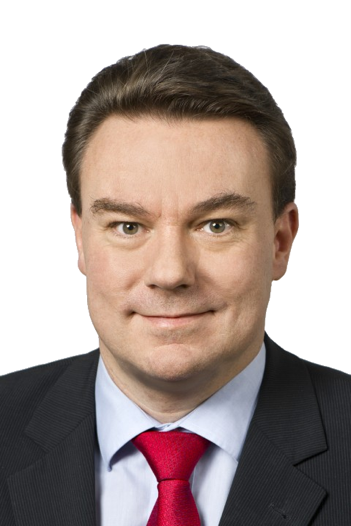
Prof. Carsten Steger
Technical University of Munich, Munich, Germany
"Learning Normal Representations: Anomaly Detection for Industrial Visual Inspection"
In PersonAbstract
Visual anomaly detection is a key component of automated quality assurance in modern manufacturing. Its central challenge is to identify previously unseen defects when only defect-free reference data are available for training. This keynote examines how different algorithmic paradigms address this problem by learning representations of normal appearance.
Beyond algorithmic approaches, the talk will review representative datasets and evaluation protocols, illustrating how benchmark design can influence the conclusions drawn about progress in the field. By connecting methodological advances with the practical requirements of industrial visual inspection, the talk provides a broader perspective on the current state of visual anomaly detection and identifies key challenges in developing models that are robust, generalizable, and reliable in real-world manufacturing environments.
Biography
The research activities of Professor Steger currently comprise all aspects of machine vision, in particular, modeling and calibration of imaging sensors, close-range photogrammetry, 3D reconstruction, 2D and 3D object detection, 6-DoF object pose estimation, and deep-learning-based anomaly detection.
Carsten Steger studied computer science at the Technical University of Munich (TUM) and was awarded a PhD by TUM in 1998. In 1996, he co-founded the company MVTec Software GmbH, where he heads the Research Department. He has authored and co-authored more than 100 scientific publications in the fields of computer and machine vision, including several textbooks on machine vision. In 2011, he was appointed an honorary professor at TUM in the field of computer vision. He was a member of the Technical Committee of the German Association for Pattern Recognition (DAGM) from 2013 until 2021 and served as the spokesperson for the Technical Committee from 2018 until 2021.
Prof. Ching Y. Suen
Concordia University in Montreal, Canada
"Artificial Intelligent meets Pattern Recognition in 2026"
OnlineAbstract
This talk is about (a) Pattern Recognition, the backbone of Artificial Intelligence, ways of recognizing different types of patterns and visible objects using image processing and machine learning methodologies, and (b) AI - Artificial Intelligence, a bit of history, theory, and various applications.
We also present the use of ViT, GPT, and deep learning techniques to recognize handwriting, to measure facial beauty, and to detect fake coins automatically. This system consists of feature measurement, 3D analysis, fuzzy set analysis, advanced PR, AI and ML techniques. For validation, many real world samples have been tested, and a near 100% accuracy has been achieved. Numerous examples will be demonstrated during this talk.
Biography
Prof. Suen is the Honorary Chair of AI and Pattern Recognition of Concordia University in Montreal, Canada. He is also the Founder and Co-Director of the world renowned Centre for Pattern Recognition and Machine Intelligence (CENPARMI). He received an M.Sc. degree from the University of Hong Kong and a Ph.D. from the University of British Columbia. A Principal Investigator or Consultant of 30 industrial projects, Dr. Suen has published conference proceedings, 16 books and more than 630 papers.
Dr. Suen is the recipient of the IAPR 2020 King-Sun Fu Prize (top honour in the field of Pattern Recognition given to only one person every two years) for "Pioneering research and exceptional contributions to handwriting recognition" leading to the modern way of writing messages with a finger on the surface of cell phones. As a former Editor-in-Chief of the Pattern Recognition Journal for ten years, he received the Elsevier Award of Excellence (2016) among numerous other awards. He is the founder of three international conferences: ICDAR, IWFHR/ICFHR, and ICPRAI.